
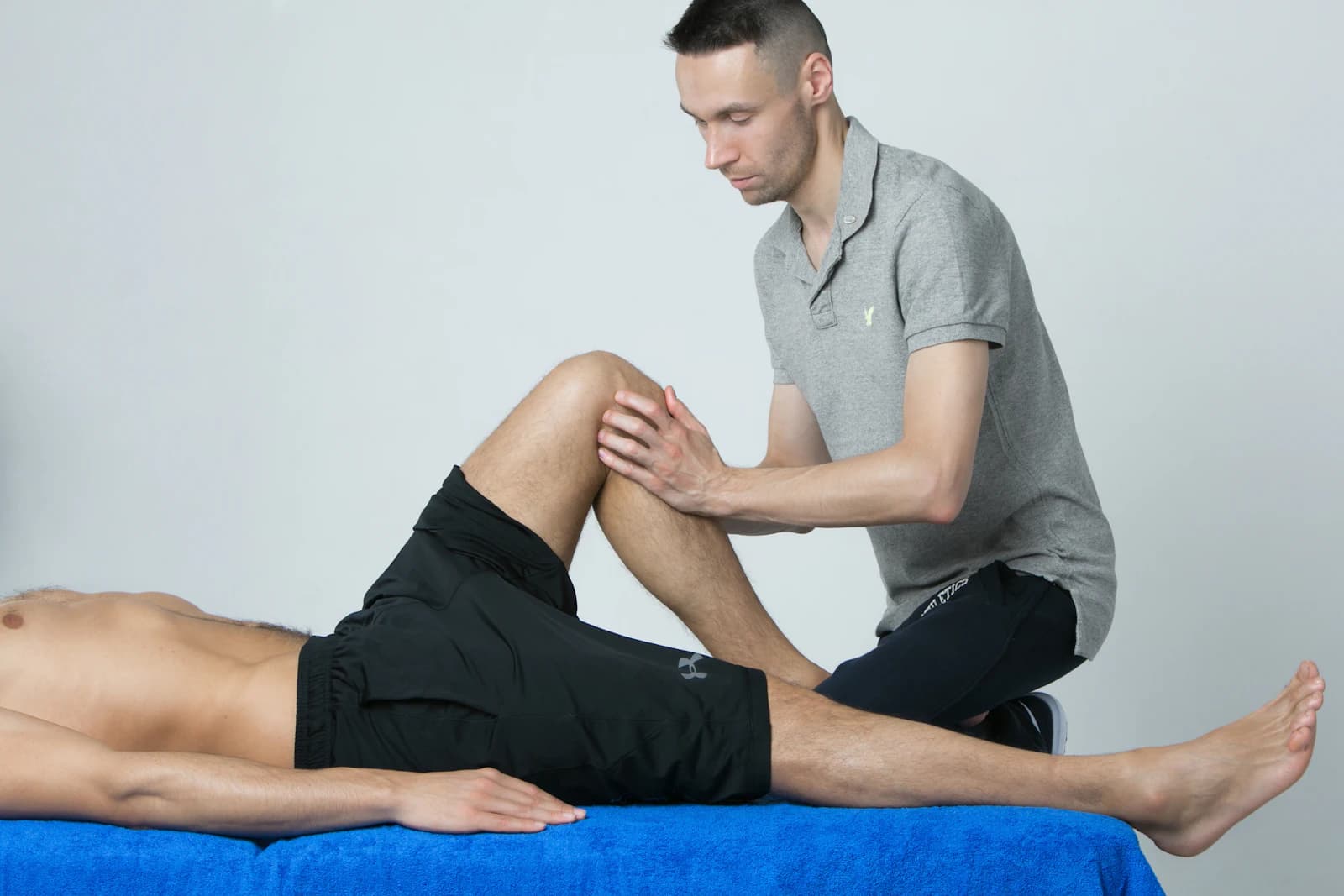
A loud "crack" in the knee during sport or even a routine movement — and suddenly the leg doesn't feel "stable". A rupture of the anterior cruciate ligament (ACL) is one of the most common and concerning injuries, affecting athletes and everyday people of all ages.
The good news is that with the right physiotherapy — whether conservative or post-surgical — the vast majority of people return to full function. The key is knowing what to expect at each stage and why rushing can prove costly. This article does not replace a personalised assessment from a professional — every case is unique.
What is the anterior cruciate ligament and why is it so important?
The ACL is one of the four main ligaments of the knee. It runs diagonally through the inside of the joint and its primary function is to prevent the shin bone (tibia) from sliding forward relative to the thigh bone (femur), as well as to resist the rotational forces that place the knee under strain.
When it tears — usually from a sudden change of direction, a landing, or a direct blow — the knee loses its stability. In many cases there is associated damage to the menisci or other ligaments, which makes assessment by a specialist essential.
Surgery or not? The question everyone asks
There is no single protocol that fits every ACL rupture. The decision between surgical and conservative management depends on many factors: age, activity level, the presence of associated injuries, and expectations regarding return to sport.
As a general guide, younger active patients and athletes are often directed towards surgical reconstruction (ACL reconstruction). In older individuals or those with lower physical demands, satisfactory stability may be achieved through intensive physiotherapy. In either case, physiotherapy is essential — before or after surgery.
Phase 1: Pre-operative physiotherapy ("Prehab")
If the patient is going to have surgery, there is an important preparation window before the operation. This phase is known as "prehab" and its outcomes directly influence the speed of post-operative recovery.
Goals of prehab: • Reduction of swelling and inflammation • Maintaining — or regaining — full range of movement in the knee • Strengthening the quadriceps, hamstrings, and gluteal muscles • Training correct walking technique and the use of assistive aids if needed
The stronger and more functional the knee is before you go into surgery, the faster you will generally recover afterwards.
Phase 2: Early post-operative rehabilitation (0–6 weeks)
Immediately after the operation, the knee is swollen and tender. Physiotherapy typically begins within the first few days, with the aim of controlling pain and inflammation and achieving early mobilisation.
Techniques and goals during this phase: • Isometric quadriceps and gluteal exercises without weight-bearing • Range-of-movement exercises to prevent stiffness • Lymphatic drainage to reduce post-operative swelling — a technique you can read about in detail in our article on lymphatic drainage • Safe walking technique with crutches • Scar management after the first few weeks
Home physiotherapy is a particularly practical solution during this phase, as getting around can be difficult. Find out more about the home physiotherapy we offer in Voula, Glyfada, Vari, and the surrounding areas.
Phase 3: Strengthening and neuromuscular control (6–12 weeks)
As the knee stabilises, the focus shifts to strengthening and neuromuscular control. This phase is critical — the muscle may grow stronger, but if the nervous system doesn't "relearn" how to control the knee, the risk of re-injury remains.
Typical exercises during this phase: • Squats with partial weight-bearing and alignment control • Stationary cycling • Balance exercises on unstable surfaces • Hamstring strengthening — particularly important for protecting the graft • Step work and lateral movements
Clinical Pilates can be incorporated at this stage to enhance core stabilisation and alignment, indirectly supporting the knee — see how it works on the Clinical Pilates page.
Phase 4: Functional rehabilitation and return to activity (3–6+ months)
This is the phase patients look forward to the most — and the one where the most mistakes happen. Rushing back to running or sport before the knee is ready significantly increases the risk of re-injury.
Goals of this phase: • Full strength symmetry between the injured and the healthy leg • Return to sport-specific movements (running, changes of direction, jumping) • Functional assessment tests before return to sport • Psychological readiness — a factor that is often overlooked
The timeframe depends on many factors. In most cases, return to high-intensity sport occurs after 9–12 months, although the exact timing is determined by objective criteria, not simply by the calendar.
The role of chiropractic care in ACL rehabilitation
An ACL rupture often affects other structures too — changes in walking pattern can overload the lower back, the hip, or the opposite ankle. Chiropractic care can relieve pain in neighbouring areas that arise during rehabilitation, improving overall mobility.
In addition, assessment of spinal and pelvic alignment can reveal underlying causes of dysfunction that may have contributed to the injury. Find out more about chiropractic care as a complementary approach.
Practical tips for patients during ACL rehabilitation
Some general principles that support the process — always in agreement with your physiotherapist:
- Don't skip the strengthening phase because you "feel fine" — the knee may be pain-free but the graft may not yet have matured
- Prioritise sleep and nutrition — recovery is a biological process that requires good overall health
- Watch for signs of overload: increased swelling or warmth in the knee after exercise means something needs to be adjusted
- Don't compare your progress to others — every rehabilitation is unique
- Contact your therapist about any change in symptoms
Home rehabilitation: A practical option
Particularly in the first weeks after surgery — or during conservative management — travelling to a clinic can be exhausting and painful. Home physiotherapy allows the rehabilitation programme to be carried out in familiar surroundings, reducing stress and making it easier to stay consistent with exercises.
Konstantinos Danalis offers personalised home physiotherapy in Voula, Vouliagmeni, Vari, Glyfada, and Alimos — so you can begin your rehabilitation without needing to travel. Contact us to book an assessment appointment.