
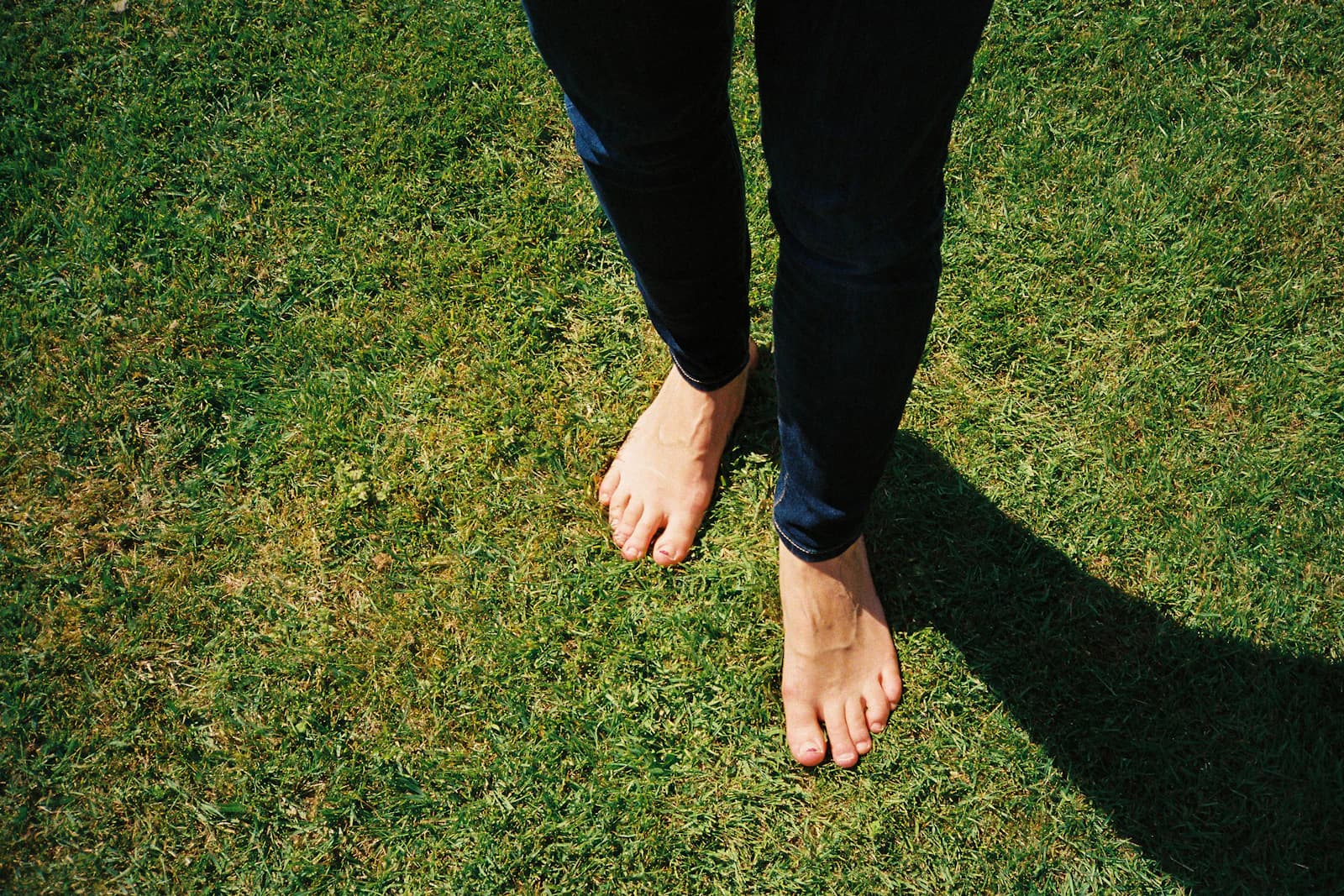
Many adults discover they have flat feet — that is, a low or absent arch — almost by chance, usually when their feet start to ache after long periods of standing or following a change in physical activity. The first reaction is often "but I've always had this" — and quite often, that is true.
The important question, however, is not whether flat feet are present, but whether they are causing a problem. In this article we will look at when flat feet require intervention, how they affect the whole body, and what physiotherapy — even at home — can do to bring you relief.
What Are Flat Feet and How Common Are They?
The foot naturally has an arch — an inner curve that acts as a natural shock absorber. In flat feet, this arch is low or completely absent, meaning the sole makes almost full contact with the ground.
There are two main types:
- Flexible flat feet: the arch appears when the foot is not bearing weight (e.g. when you are seated), but disappears when standing. This is the most common type.
- Rigid flat feet: the arch is absent even without weight-bearing — usually associated with bony abnormalities or more serious conditions.
It is estimated that a significant proportion of adults have some degree of flat feet, but in most cases this causes no symptoms. Problems begin when the biomechanical instability affects the way we walk and places excess strain on joints and muscles.
How Flat Feet Affect the Knees, Hips, and Lower Back
The foot is the foundation of the entire kinetic chain. When the arch collapses, the foot tends to "pronate" — that is, to roll inwards during walking. If excessive, this movement does not only affect the foot; it alters the posture of the whole body.
Common issues that may be associated with untreated flat feet:
- Pain in the heel or sole (often plantar fasciitis)
- Foot fatigue after short distances
- Knee pain, particularly on the inner side
- Discomfort in the hip due to changes in femoral rotation
- Lower back pain from uneven loading of the spine
If you notice persistent hip pain or low back pain without an obvious cause, it is worth having your posture and foot biomechanics assessed.
When Do Flat Feet Need Treatment?
Not every case of flat feet requires treatment. However, it is worth seeking an assessment from a physiotherapist when:
- You experience pain or fatigue in your feet, knees, or lower back related to standing or walking
- Your shoes wear down unevenly on the inner midfoot area
- You have recently changed your activity levels (e.g. you have taken up running or a sport)
- There is a visible asymmetry in your feet
- You also have plantar fasciitis, tendinopathy, or chronic pain
Early assessment can prevent the condition from progressing into more complex problems. Please note: this article is not a substitute for an individualised clinical assessment.
What Does a Physiotherapy Assessment Involve?
A physiotherapist does not simply look at the sole of your foot. They assess your overall posture, your gait (gait analysis), and the flexibility and strength of your muscles from your toes all the way up to your core.
Possible assessment tools and techniques:
- Observation of gait on various surfaces
- Measurement of arch height (Navicular Drop Test)
- Assessment of Achilles tendon and calf muscle flexibility
- Evaluation of muscle strength, particularly the tibialis posterior and the intrinsic foot muscles
- Assessment of knee and hip alignment
Based on this overall picture, an individualised treatment programme is designed.
Exercises Your Physiotherapist May Show You
The aim of exercise in flat feet is to strengthen the muscles that «support» the arch and to improve movement control.
Common categories of exercises:
- Intrinsic foot muscle exercises: e.g. the short foot exercise — contracting the sole without curling the toes, to «lift» the arch
- Tibialis posterior strengthening: the key muscle supporting the inner arch — often performed as a single-leg heel raise
- Calf and Achilles tendon stretches: tightness in the calf worsens pronation
- Balance exercises on an unstable surface: improve neuromuscular control of the foot
- Gluteal strengthening: supports the biomechanics of the entire lower limb
Clinical Pilates can also be incorporated for systematic core strengthening and improvement of the postural issues associated with flat feet.
The Role of Manual Therapy and Other Techniques
In some cases, flat feet are accompanied by restricted mobility in the joints of the foot or ankle. Chiropractic care can help through joint mobilisation, improving flexibility and reducing tension in the surrounding tissues.
Additional techniques that may be used:
- Soft tissue techniques (myofascial release) for the calf and foot muscles
- Kinesio taping for temporary arch support and improved proprioception
- Electrotherapy or TECAR in the presence of accompanying pain or inflammation
- Footwear advice and orthotic insoles in collaboration with an orthopaedic specialist or podiatrist
Important: orthotic insoles «support» the arch but do not replace strengthening exercises. A combined approach generally produces the best results.
Home Physiotherapy for Flat Feet
For many patients — particularly those who spend long hours on their feet at work, people with limited mobility, or those who simply cannot find the time to travel — home physiotherapy is an especially practical option.
At home, your physiotherapist can:
- Assess your posture and gait in your natural environment
- Teach you the correct exercises with immediate correction of any errors
- Observe the footwear you use and the spaces in which you move
- Design a programme that fits realistically into your daily routine
Home physiotherapy covers Voula, Vouliagmeni, Vari, Glyfada, and Alimos — you can get started without needing to travel.
When Are Exercises Enough and When Is More Needed?
The vast majority of people with symptomatic flexible flat feet respond well to a structured physiotherapy programme. Progress is usually noticeable within a few weeks of consistent effort.
In rarer cases — mainly rigid flat feet or a tibialis posterior tendon rupture — referral to an orthopaedic specialist may be necessary. Your physiotherapist will guide you on the next step if the programme is not producing the expected results.
If you would like to start with an assessment, contact us to book an appointment.