
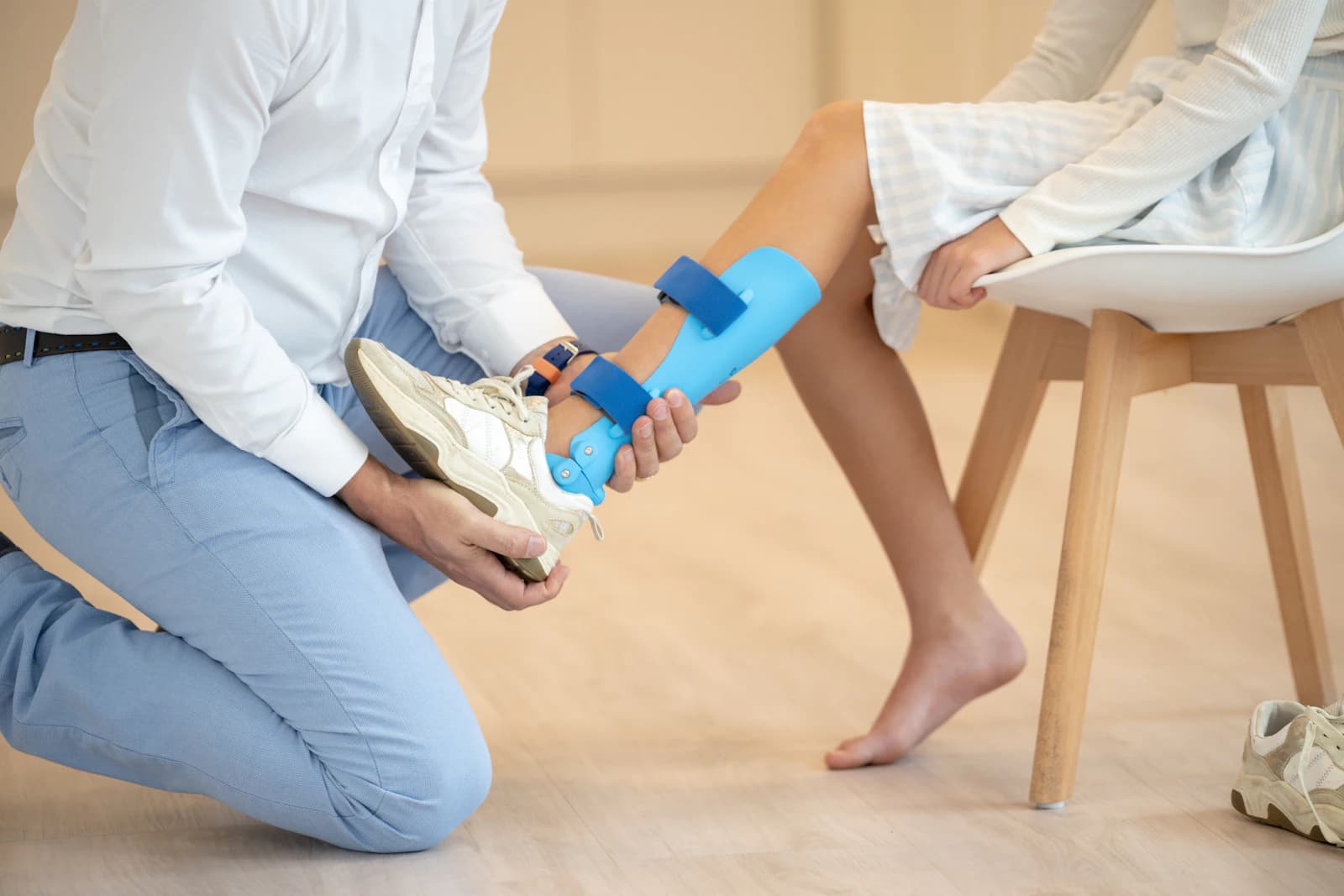
A sports injury doesn't always strike on the pitch or in the gym. It often happens during an evening walk, a run along the seafront, or even with a sudden movement at home. And what follows — the pain, the weakness, the worry about when you'll be back in action — is just as stressful.
The good news: in most cases, prompt and appropriate physiotherapy intervention can make a huge difference. And you don't always need to travel to a clinic — home physiotherapy offers the same high standard of care in the comfort of your own home.
Which Sports Injuries Can Be Treated at Home?
Not all injuries are the same, and a home-visit approach doesn't suit every situation. However, there is a wide range of common injuries for which a physiotherapist can come directly to you:
- Muscle strains and tears (thigh, calf, hamstrings)
- Ankle and knee sprains
- Tendinopathies (Achilles, epicondylitis, rotator cuff tendon)
- Lower back or neck pain following sporting activity
- Rehabilitation after sports surgery (at the stage where mobilisation is permitted)
- Overuse syndromes (runner's knee, shin splints, plantar fasciitis)
If you're not sure whether your situation is suitable for home care, a brief phone call with your physiotherapist can give you a clear picture straight away.
Why Early Mobilisation Matters
In the past, the prevailing belief was "rest and wait for it to pass". Today we know that — in most soft tissue injuries — timely, controlled mobilisation helps tissues heal more quickly and prevents the development of chronic pain.
This doesn't mean "go out and run". It means that a trained physiotherapist can design a programme that respects the healing phase, gradually builds strength, and returns you to activity safely — not in a rush, but without unnecessary delay.
This article is not a substitute for an individualised assessment. Every injury has its own nature, and only a clinical examination can determine the appropriate rehabilitation plan.
The Four Stages of Sports Injury Rehabilitation
Recovery is not a straight line — but it follows a logical progression that your physiotherapist will help you work through:
- **Stage 1 – Inflammation control:** Reducing pain and swelling, protecting the injured tissue, gentle range-of-movement exercises.
- **Stage 2 – Restoring mobility:** Gradual restoration of range of movement, soft tissue therapy, movement re-education.
- **Stage 3 – Strength and stabilisation:** Strengthening exercises tailored to the injury, balance, neuromuscular control.
- **Stage 4 – Return to activity:** Functional exercises that replicate the movements of your sport or daily life, relapse prevention.
The key is not to skip any stage out of impatience — this is often the cause of relapses.
What Does a Home Physiotherapy Session Include?
Many patients wonder: "What can a physiotherapist do in my home without equipment?" The truth is that the majority of techniques rely on skilled hands and knowledge — not machinery.
A typical home session may include:
- Clinical assessment of the injury and functional ability
- Manual therapy (massage, mobilisation, soft tissue techniques)
- An exercise programme tailored to your space and needs
- Taping or neuromuscular tape if required
- Guidance on what to do (and what to avoid) between sessions
- Planning a programme for return to sport
For more information about home physiotherapy, you can view in detail the services available in Voula, Vouliagmeni, Vari, Glyfada, and Alimos.
Chiropractic Care as a Complement to Sports Rehabilitation
For certain injuries — particularly where stiffness in the spine or other joints is also present — chiropractic care can work as a complement to physiotherapy.
Chiropractic focuses on restoring joint mobility and reducing the muscular tension that frequently develops as a compensatory response around an injury. Combined with the treatment programme, it can help achieve faster functional recovery — always depending on the clinical presentation.
Clinical Pilates: The "Bridge" from Injury to Sport
Once pain has eased and mobility has returned, the next step is regaining functional strength and movement control. This is where Clinical Pilates proves particularly valuable.
Unlike exercise that demands intensity straight away, Clinical Pilates trains the deep stabilising muscles — those that "protect" the joints and prevent relapses. It is ideal for athletes who want to return to their activity safely, as well as recreational exercisers who simply want to move better.
See also our article on runners' injuries for more specialist information on running rehabilitation.
Relapse Prevention: The Most Important Chapter
An injury that has been "treated" but not properly rehabilitated has a much greater chance of recurring. Relapse prevention is not a matter of chance — it is based on a specific rationale:
- Full strength restoration (on both sides, not just the injured one)
- Balance and proprioception — the body needs to "relearn" how to feel secure
- Education in correct movement technique for the sport or activity
- Gradual return to full load — never forced
- Regular reassessment to catch the "silent" signs of overuse early
If you have suffered from sciatica or lower back pain following sporting activity before, read our article on managing low back pain as well.
When to Seek Immediate Medical Attention
Physiotherapy is invaluable — but it is not appropriate for every situation from the very first moment. There are signs that require immediate medical assessment:
- Significant swelling that appears suddenly after the injury
- Inability to bear weight on or use a limb
- Deformity or the sensation that "something has broken"
- Numbness, tingling, or weakness spreading into a limb
- Pain that does not ease at all with rest
In these cases, your first contact should be with a doctor or emergency services, and physiotherapy follows afterwards, guided by the diagnosis.
How to Get Started
If you are in Voula, Vouliagmeni, Vari, Glyfada, or Alimos and are dealing with a sports injury — or simply pain that is preventing you from being active — the best next step is to speak with a specialist physiotherapist.
An initial home assessment gives you a clear picture of the nature of the problem, the appropriate rehabilitation plan, and a realistic timeframe for returning to your activity — without losing a single extra day beyond what is truly necessary.
Book an appointment for a home assessment and start your recovery today.