
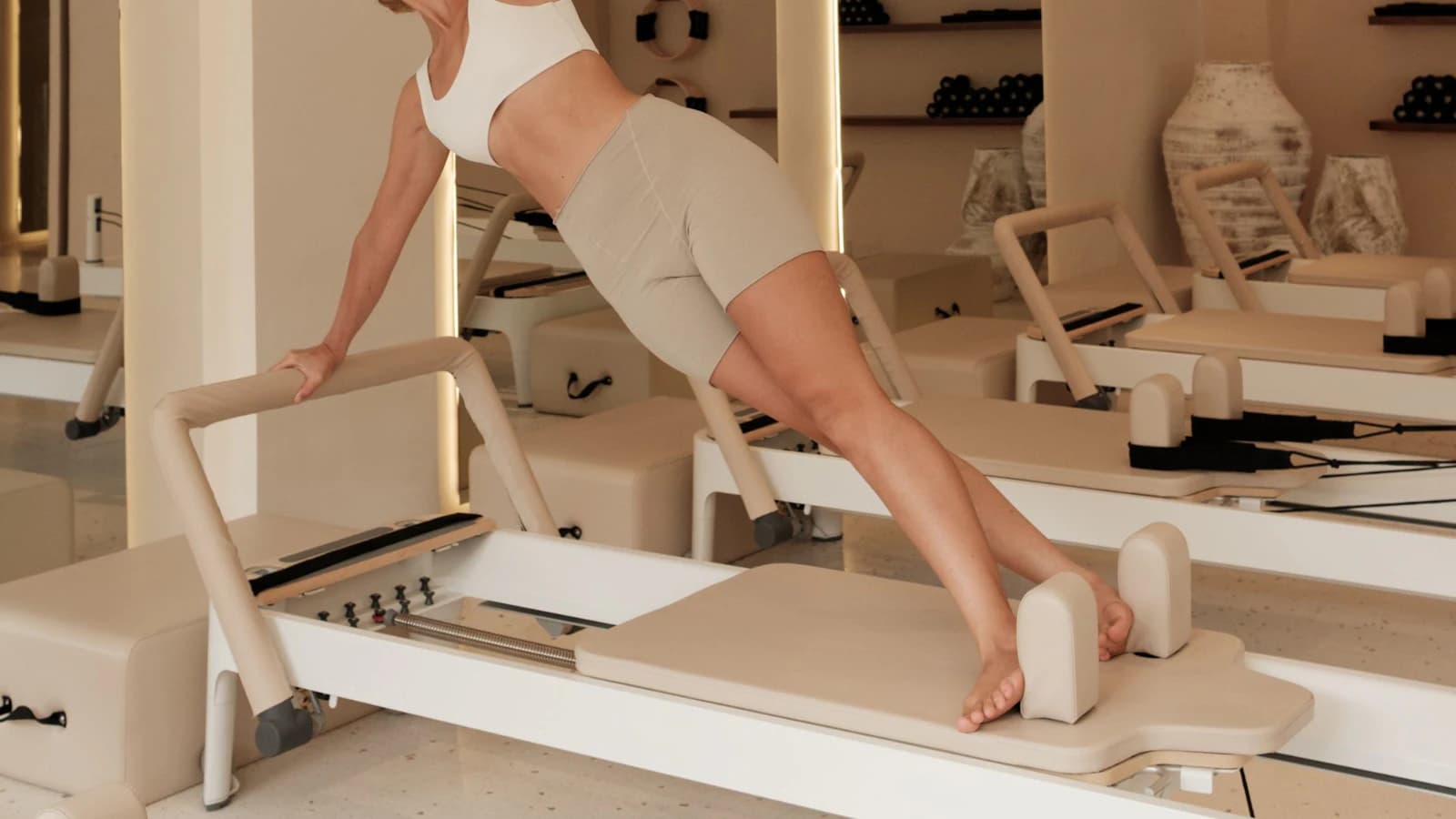
If you have been looking for ways to manage back pain, weakness following an injury, or difficulties with your posture, you have probably come across the term "Clinical Pilates". Many people wonder, though: what makes it different from the classical Pilates offered at gyms?
The answer lies in the way it is designed and delivered. Clinical Pilates is not simply a more "medical" version — it is a fully personalised therapeutic tool in the hands of a trained physiotherapist. In this article we explain the differences, the benefits, and who stands to gain the most.
What is classical Pilates?
Pilates was developed by Joseph Pilates in the early 20th century as an exercise system focusing on core strength, flexibility, and the coordination of movement with breathing. Today it is widely taught in studios and gyms, in group classes led by fitness instructors.
Classical Pilates is excellent for: • General fitness improvement • Core strengthening in healthy individuals • Improving flexibility and posture • Relaxation and wellbeing
However, a group class is not designed to address specific conditions or injuries — and that is where Clinical Pilates comes in.
What is Clinical Pilates?
Clinical Pilates is the application of Pilates principles and exercises by a trained physiotherapist, based on the individual assessment of each patient. It does not follow a fixed programme — every exercise plan is designed from scratch for that specific patient, according to their diagnosis, weaknesses, and goals.
The physiotherapist: • Assesses posture, muscular balance, and areas of dysfunction • Designs a personalised exercise programme • Monitors and modifies the programme at every session • Identifies and corrects compensatory movement patterns that may be aggravating pain
Clinical Pilates does not replace physiotherapy — it is an integral part of it.
The key differences in practice
Here is a concise look at the main differences:
- **Practitioner:** In classical Pilates, the instructor holds a Pilates certification. In Clinical Pilates, the professional is a licensed physiotherapist with specialist training.
- **Assessment:** Classical Pilates typically begins without a clinical assessment. Clinical Pilates always begins with a full musculoskeletal assessment.
- **Personalisation:** In group classes, the exercises are the same for everyone. In Clinical Pilates, every programme is unique.
- **Goal:** Classical Pilates targets general fitness. Clinical Pilates targets treatment, rehabilitation, or prevention of recurrence.
- **Safety with medical conditions:** Certain Pilates exercises may be contraindicated in conditions such as osteoporosis, disc herniation, or post-surgical rehabilitation. The physiotherapist knows when and how to modify them.
Which conditions does Clinical Pilates help with?
Clinical Pilates is used across a wide range of conditions. The most common include:
- **Low back pain:** Strengthening the deep core muscles that stabilise the spine. You can find out more in our article on managing low back pain.
- **Neck pain:** Improving cervical stability and correcting posture — see also our article on neck pain.
- **Post-surgical rehabilitation:** Gradual return to function following orthopaedic procedures.
- **Osteoporosis:** Gentle, controlled exercises that improve muscle strength and reduce the risk of falls.
- **Pregnancy and postnatal recovery:** Strengthening the pelvic floor and core muscles.
- **Chronic pain:** Retraining the neuromuscular system for better movement management.
- **Scoliosis:** Personalised exercises to improve posture and reduce imbalance.
- **Sports rehabilitation:** A safe return to sport following injury.
This list is not exhaustive. If you are unsure whether Clinical Pilates is right for your situation, an assessment by a physiotherapist is the first step.
Who should not do classical Pilates without guidance?
There are situations in which a standard Pilates class at a studio may be inappropriate or may even worsen a problem:
- People with an intervertebral disc herniation (certain flexion movements increase pressure on the disc)
- Patients who have had surgery on the spine, hip, or knee
- People with severe osteoporosis
- Women with pelvic floor dysfunction
- People with neurological conditions
- Older adults with balance difficulties or frailty
In all of these cases, Clinical Pilates offers a safe and effective alternative, as the physiotherapist knows which exercises to select, which to avoid, and how to adapt them to your needs.
Clinical Pilates at home: a realistic option?
Many patients — particularly those who have difficulty travelling, are recovering from surgery, or belong to vulnerable groups — wonder whether they can benefit from Clinical Pilates without having to visit a clinic or studio.
The answer is yes. The physiotherapist can design a home exercise programme — with or without equipment — and monitor your progress at each visit. Home physiotherapy in the southern Athens Riviera area (Voula, Vouliagmeni, Vari, Glyfada, Alimos) makes it possible to receive specialist care in your own home, at times that suit you.
It is important to note that the exercises included in a home programme depend on the available space, the patient's capabilities, and the treatment goal. The physiotherapist will assess and adapt accordingly.
What does a Clinical Pilates session involve?
If you decide to try Clinical Pilates, here is what you can expect:
- **Initial assessment:** The physiotherapist takes your history and assesses your posture, strength, flexibility, and movement control.
- **Goal setting:** Together you define the therapeutic goals (e.g. pain reduction, return to sport, improved balance).
- **Personalised programme:** The physiotherapist designs exercises suited to you, starting at a level of difficulty you can manage safely.
- **Follow-up sessions:** At each visit the programme is reviewed — exercises progress as you improve.
- **Home programme:** The physiotherapist will often give you exercises to do at home, so that progress is continuous.
This article is for informational purposes only and does not replace a personalised assessment by a physiotherapist. Every case is unique.
When to choose Clinical Pilates and when to choose classical?
In summary:
- If you are healthy and want to improve your general fitness, strength, or flexibility → classical Pilates at a good studio is an excellent choice.
- If you have pain, an injury, a chronic condition, or are recovering from surgery → Clinical Pilates with a physiotherapist is the safe, targeted choice.
- If you are an athlete looking to improve performance and reduce the risk of injury → Clinical Pilates can work as a complementary approach.
In many cases the two can coexist: you may begin with Clinical Pilates for therapeutic reasons and move on to group classes once your rehabilitation allows.
If you are not sure which option suits you, do not hesitate to contact us for an initial assessment.