
If you feel stiffness in your knee in the mornings, notice a characteristic "crunching" sound when climbing stairs, or experience discomfort after sitting for a long time, you have probably already come across the term "osteoarthritis". It is one of the most widespread joint conditions in the world and affects the knee in particular — the largest and most heavily loaded joint in the body.
The good news is that osteoarthritis does not automatically mean surgery or disability. In most cases, the right physiotherapy management can significantly reduce pain, improve mobility and allow you to return to your everyday activities. This article explains in straightforward terms what happens inside the joint, which treatments help and when it is worth seeking a professional assessment.
What Is Knee Osteoarthritis
Osteoarthritis (OA) is a degenerative joint condition in which the articular cartilage — the smooth layer that "cushions" the bones — gradually wears away. As the cartilage thins, the bones rub against each other, causing pain, inflammation and difficulty moving.
In the knee, this wear typically presents as:
- Pain during weight-bearing activities (walking, climbing stairs, rising from a chair)
- Stiffness in the morning or after prolonged rest
- A "grinding" or "crunching" sensation in the joint
- Mild swelling around the knee
- A gradual reduction in range of movement
Knee OA is most common in people over the age of 50, but it can appear earlier — particularly following injuries, in people who are overweight, or in those who have worked in physically demanding occupations.
Why Exercise Is "Medicine" for Knee OA
One of the most common mistakes made by patients with osteoarthritis is to avoid all movement out of fear of making the pain worse. In reality, strategic mobilisation of the joint is one of the most effective "medicines" available to us.
Guided exercise helps because it:
- Strengthens the muscles around the knee (primarily the quadriceps and hamstrings), reducing the load on the joint
- Improves the circulation of synovial fluid, which "nourishes" the remaining cartilage
- Reduces inflammation through biochemical mechanisms
- Improves proprioception (the joint's sense of position), lowering the risk of falls
- Enhances overall function and independence in daily activities
Of course, exercise must be tailored to each individual's needs and abilities — which is why guidance from a specialist physiotherapist is essential.
What a Physiotherapy Programme Involves
An individualised physiotherapy programme for knee osteoarthritis typically combines passive techniques with active rehabilitation.
The most commonly used passive techniques include:
- Manual therapy and joint mobilisation to improve range of movement
- Soft tissue therapy (massage) to relieve tension in the muscles surrounding the joint
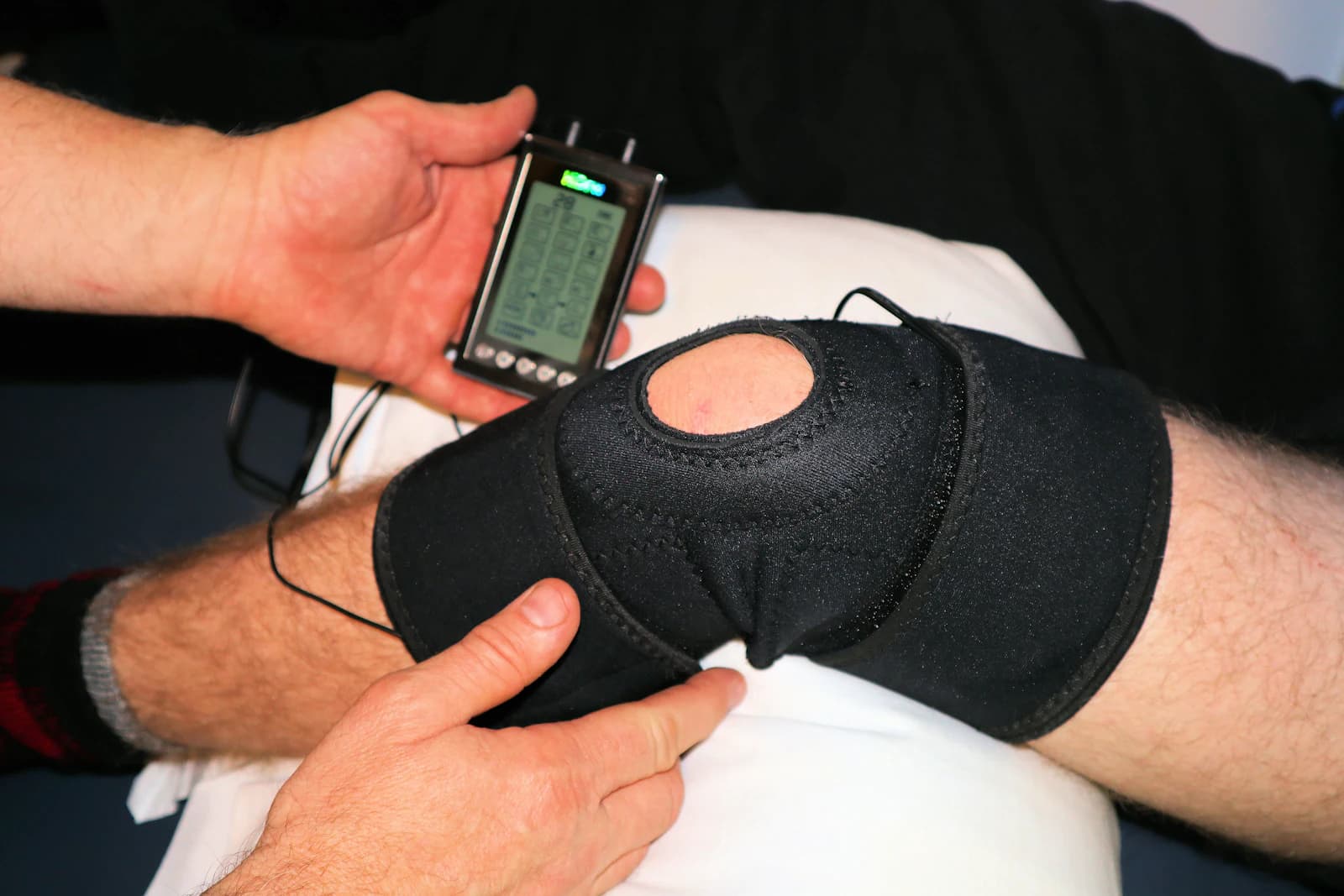
- Physical modalities (ultrasound, TENS, heat therapy) for pain relief
- TECAR therapy or other modern interventions, depending on the severity of the condition
Active interventions include:
- Quadriceps and gluteal strengthening exercises within a controlled range
- Balance and proprioception exercises
- Gentle aerobic exercises (e.g. stationary cycling)
- Stretching to improve flexibility
A combined approach tends to produce the best results in the majority of cases.
The Role of Chiropractic Care in Managing OA
Chiropractic care is not limited to the spine. As part of a holistic approach to knee osteoarthritis, a chiropractor can assess and address dysfunction in adjacent joints — the hip, sacroiliac joint and lumbar spine — which often place additional strain on the knee.
A classic example: a "locked" hip forces the knee to take on a greater range of movement than it can handle, accelerating wear. Restoring mobility to the hip can "offload" the knee and reduce pain.
If you would like to find out more about chiropractic care, you can visit the relevant chiropractic page. For pain that radiates from the hip towards the knee, it is also worth reading about hip pain.
Clinical Pilates: Safe Strengthening for Sensitive Knees
Clinical Pilates is particularly well suited to patients with knee osteoarthritis, as it allows strengthening within a controlled range of movement, without impact and without overloading the joint.
Using equipment such as the Reformer or Cadillac, the physiotherapist can:
- Strengthen the quadriceps and hip muscles without placing the patient in painful positions
- Improve core stability, reducing the indirect load on the knee
- Retrain correct movement patterns for walking and rising from a seated position
- Gradually rebuild the patient's confidence in movements they had been avoiding
Clinical Pilates differs from standard Pilates precisely in that it is designed around the individual's diagnosis and assessment — it is not "general exercise".
Home Physiotherapy: A Solution for Those Who Find Travel Difficult
Knee osteoarthritis frequently affects people who have difficulty getting around — particularly in the early stages of treatment, when pain is intense, or in older patients. Home physiotherapy is a practical solution that removes the barrier of travel.
In the areas of Voula, Vouliagmeni, Vari, Glyfada and Alimos, a physiotherapist can visit the patient at home and carry out a full assessment, treatment and exercise instruction — in familiar surroundings.
Home care has an additional advantage: the therapist can see the patient's actual living conditions (stairs, furniture, footwear) and provide personalised recommendations for preventing deterioration and falls.
Grades of OA: When Is Conservative Management Enough?
Osteoarthritis is usually classified into 4 grades (Kellgren–Lawrence scale), based on radiological findings. However, an important finding from modern research is that the degree of radiological wear does not always correspond to the degree of pain or functional decline.
Generally speaking:
- At grades 1 and 2, conservative management (physiotherapy, exercise, weight management) is usually sufficient and effective
- At grade 3, physiotherapy can significantly improve function, even when the wear is considerable
- At grade 4, surgical intervention (joint replacement) may be necessary, but pre-operative physiotherapy still significantly improves post-operative outcomes
In every case, the decision should be made in collaboration with an orthopaedic surgeon and a physiotherapist, on the basis of an individualised assessment — not solely from an X-ray.
Practical Tips for Everyday Life
In addition to treatment, small changes to daily life can make a significant difference in managing knee OA:
- Avoid prolonged sitting — get up every 30–40 minutes for a short walk
- Choose gentle aerobic activities such as swimming or cycling rather than running on hard surfaces
- Maintain a healthy body weight — every kilogram lost corresponds to a meaningful reduction in the load on the knee
- Wear appropriate footwear with good shock absorption
- Avoid sitting on very low surfaces that make it difficult to stand up
- Apply cold packs during inflammatory episodes (swelling, warmth) and heat when stiffness is the predominant symptom
Of course, every case is different. These tips are general in nature and do not replace an individualised assessment by a healthcare professional.
When to Seek Professional Help
If you recognise the symptoms described above, it is important not to delay seeking an assessment. Early intervention generally produces far better outcomes than waiting until the pain becomes unbearable.
However, there are signs that require prompt medical attention:
- Sudden, severe swelling with warmth and redness (which may indicate infection or a gout flare)
- A feeling of instability or the joint "locking"
- Pain that wakes the patient at night
- A significant change in gait or inability to bear weight
If you would like to begin with an assessment, you are welcome to contact us to book an appointment — at home or at a treatment venue, depending on your needs.