
You hear the word "scoliosis" and you immediately picture a teenager wearing a brace or corset. In reality, scoliosis in adults is far more common than we might think — and it often goes undiagnosed for years.
If you experience chronic pain in your lower back or mid-thoracic region, if one shoulder appears higher than the other, or if you find your posture tires you out easily, this article is worth reading. The important thing is that options exist — and physiotherapy is usually at the heart of them.
What Is Adult Scoliosis
Scoliosis is a sideways curvature of the spine, often in an "S" or "C" shape. In adults, we recognise two main types:
- Adolescent idiopathic scoliosis that persists into adulthood: the curve from adolescence remains present and sometimes worsens over time.
- Degenerative scoliosis (de novo): appears for the first time in people over 40–50 years of age, due to asymmetric wear of the discs and joints of the spine.
In both types, pain, stiffness and reduced endurance are the most common complaints. Scoliosis alone does not automatically mean severe pain — many people live with mild curves without significant discomfort. However, when pain does arise, addressing it requires a personalised approach.
Symptoms Worth Looking Out For
Scoliosis in adults can present in a variety of ways:
- Pain in the lower back or mid-thoracic region, which worsens after prolonged standing or walking
- A sensation of a "twisted" posture — as though one side is being pulled
- Asymmetry of the shoulders or pelvis
- Numbness or tingling in the legs (when scoliosis is accompanied by spinal canal stenosis)
- Fatigue in the back muscles after relatively little activity
- Difficulty standing upright for extended periods
If you recognise several of these symptoms, an assessment by a physiotherapist can give you valuable insight into what is happening and how to find relief.
Can Physiotherapy Help?
The vast majority of adults with scoliosis are managed conservatively — without surgery. Physiotherapy aims to reduce pain, improve function, and slow any potential progression of the curve.
It does not reverse the anatomical curve in adults — this is something you should know from the outset. What it can do, however, is significant:
- Reduce muscle spasm and tension around the curve
- Improve muscle balance so that posture becomes more comfortable
- Increase spinal mobility
- Give you self-management tools for everyday life
Research shows that specialist methods — such as Clinical Pilates and Schroth Scoliosis Rehabilitation — can help a considerable number of people improve their quality of life.
Methods Used in Physiotherapy
Your physiotherapist will design a programme tailored to the type and size of your curve, your age, and your symptoms. The most common approaches include:
- Individualised scoliosis rehabilitation exercises: targeted movements that address asymmetry
- Clinical Pilates: activation of deep stabilisers, improving alignment and endurance
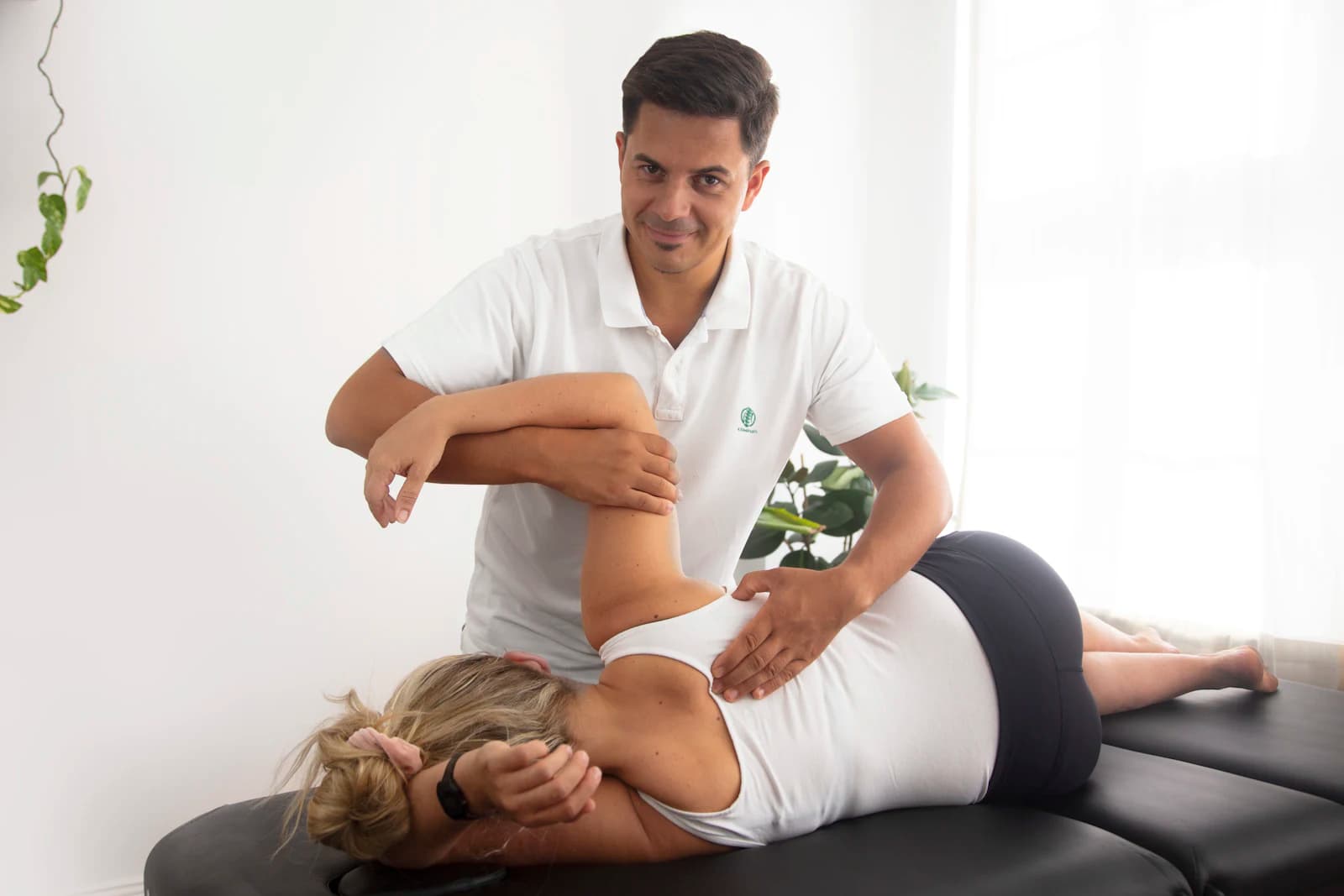
- Manual therapy / soft tissue techniques: to relieve muscle tension and stiffness
- Posture education: how to stand, sit and move with less pain
- Core strengthening exercises: the core acts as a "natural corset" for the spine
- Relaxation and breathing techniques: breathing plays a particularly important role in thoracic scoliosis
For low back pain associated with scoliosis, treatment often combines passive and active techniques depending on the stage.
The Connection with Neck Pain
Many patients with thoracolumbar scoliosis go on to develop secondary neck pain — the neck "tries to compensate" for the lower curve in order to keep the eyes level. This creates muscular overload in the neck and shoulders.
When we treat scoliosis, we take the entire spine into account — from the neck down to the pelvis. This holistic approach is often what makes the difference in long-term outcomes.
Home Physiotherapy: A Realistic Option
For many adults — particularly older individuals or those with limited mobility — travelling to a clinic can be tiring or difficult. Home physiotherapy offers a practical alternative.
From the comfort of your own home, your physiotherapist can:
- Assess your posture and mobility within your natural environment
- Design an exercise programme suited to the spaces and equipment you have available
- Offer ergonomic advice around the home (bed, sofa, kitchen)
- Apply therapeutic relaxation and mobilisation techniques
If you are based in Voula, Vouliagmeni, Vari, Glyfada or Alimos, a home assessment is entirely feasible and especially beneficial for those who find it difficult to travel regularly.
When More Specialist Management Is Needed
In most cases, conservative management with physiotherapy is sufficient. However, there are signs that indicate a referral to an orthopaedic surgeon or neurosurgeon is needed:
- Rapid progression of the curve over a short period of time
- Significant neurological symptoms (severe numbness, weakness in the legs, bladder problems)
- Pain that does not respond at all to conservative treatment after an adequate period of time
- A very large curve angle (above 50° by the Cobb method) with progressive worsening
In any case, physiotherapy can work alongside other medical interventions — it is not a matter of one or the other.
What to Expect from Your First Sessions
During the initial assessment, your physiotherapist will examine your posture, measure your range of movement, evaluate your muscle balance and take a full history. If you have any X-rays or MRI scans, it is well worth bringing them along.
The first sessions typically focus on relieving pain and helping you understand your condition. Gradually, the programme progresses towards strengthening and independence — with the long-term goal of enabling you to manage your scoliosis on your own.
Please remember: this article provides general information and does not replace a personalised assessment by a healthcare professional. Every case of scoliosis is different.
If you would like to find out whether physiotherapy can help you, get in touch with us to arrange an initial assessment.