
Do you feel a persistent, deep ache in your buttock that sometimes "travels" towards your thigh or calf? If so, you may have heard the term "sciatica" — and that is not entirely wrong, as the sensation is similar. However, in many cases the real culprit is not the spine but a small muscle deep in the buttock: the piriformis.
Piriformis Syndrome is a condition that frequently "slips through" diagnoses, mainly because its symptoms closely resemble those of a disc problem or lumbar sciatica. The good news is that in most cases it can be treated effectively with conservative physiotherapy, without the need for surgery.
What is the piriformis muscle and why does it matter?
The piriformis is a small but important muscle situated deep in the buttock, connecting the sacrum to the greater trochanter of the femur. Its role is the external rotation and abduction of the hip — movements we use every day when walking, climbing stairs, or even rising from a chair.
The crucial anatomical detail is that the sciatic nerve — the largest nerve in the body — passes either beneath the piriformis or, in a proportion of people, directly through the muscle itself. When the piriformis becomes tense, inflamed, or overstretched, it can compress the sciatic nerve and cause a nerve-related pain that radiates along the leg.
How it presents — the main symptoms
The symptoms of Piriformis Syndrome vary from person to person, but they typically include:
- A deep, dull or burning pain deep in the buttock, often on one side only
- Pain that worsens with prolonged sitting (e.g. at a desk or in a car)
- Difficulty or discomfort going up and down stairs or walking uphill
- A sensation of numbness or "pins and needles" travelling down the thigh or calf
- Pain that eases when lying down and returns as soon as you stand up
- Tenderness when the buttock area is pressed
An important difference from "classic" sciatica: in Piriformis Syndrome there is usually no pain along the lumbar spine, whereas direct pressure on the buttock immediately reproduces the symptoms.
Who is most at risk?
Piriformis Syndrome can develop at any age, but certain groups are more commonly affected:
- People with desk jobs who do not take regular movement breaks
- Runners and athletes who perform many repetitive movements (running, cycling)
- People who have suddenly started a new exercise programme
- Those who have sustained an injury to the buttock or a fall
- People with leg-length discrepancy or biomechanical irregularities in the hip
- Women during pregnancy, due to changes in posture and body weight
Lifestyle also plays a role: sitting for long periods with crossed legs or with your wallet in your back pocket (known as "wallet sciatica") can place chronic strain on the piriformis.
How does it differ from sciatica caused by a disc problem?
This is the question most patients ask — and the distinction is clinically important, as it determines the course of treatment.
With a disc problem / herniated disc, the pain starts in the lower back and "travels" down the leg. It is often accompanied by pain on bending the trunk, prolonged morning stiffness, and findings on MRI. If you would like to read more about disc problems, see our article on disc herniation.
With Piriformis Syndrome: • The pain is located mainly in the buttock, without marked low back pain • It worsens particularly with sitting and rotation of the hip • The pain is easily reproduced by pressing on the buttock • MRI and CT scans of the spine are often entirely normal
A proper assessment by a specialist physiotherapist is essential, so that you are not subjected to treatments that do not address the real problem.
Physiotherapy as the primary treatment approach
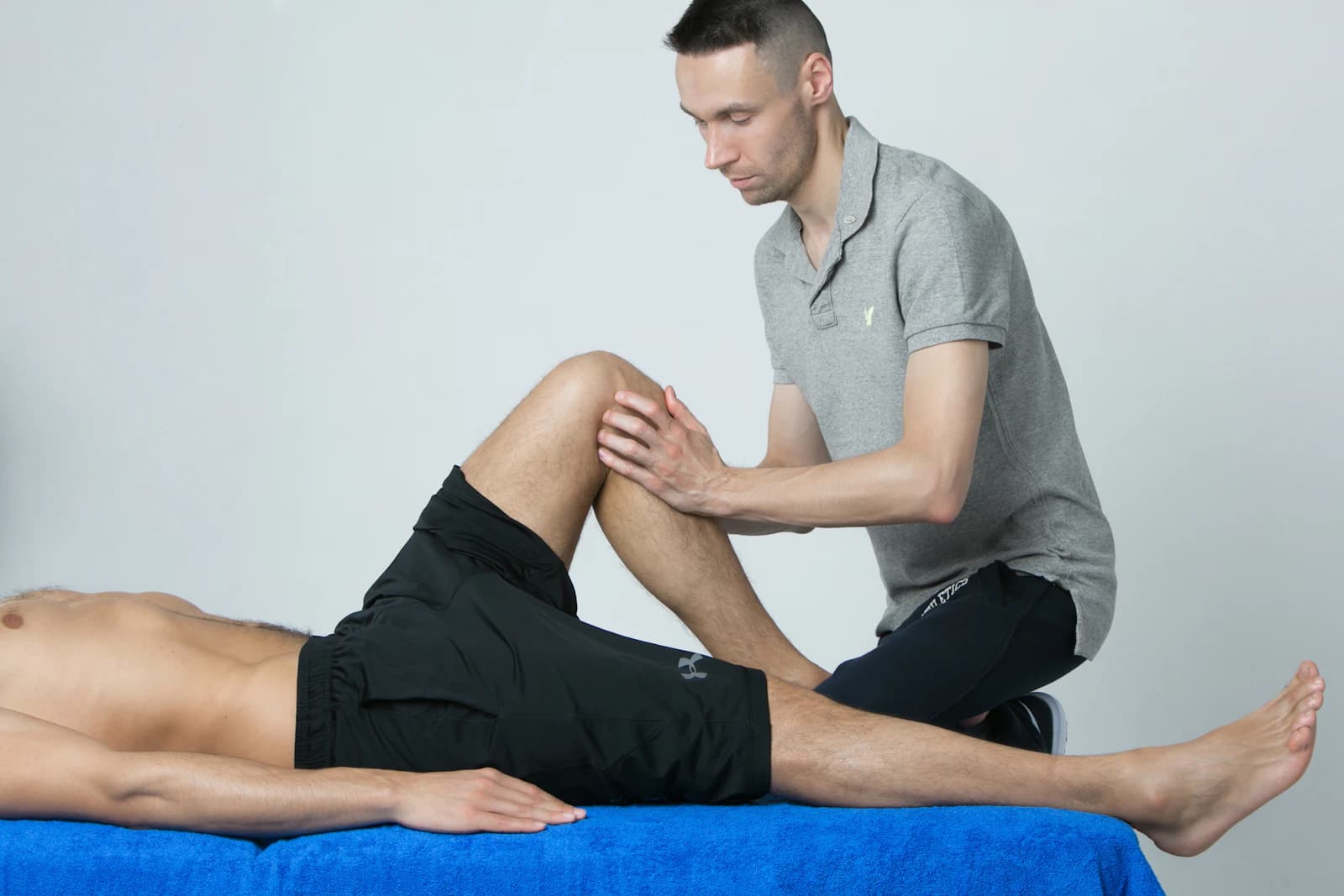
Physiotherapy is the cornerstone of managing Piriformis Syndrome. A personalised treatment programme may include:
- Manual therapy techniques and hip mobilisation to restore normal range of movement
- Targeted stretching of the piriformis and the deep gluteal muscles
- Strengthening of the gluteus medius and hip abductors, which are often weak
- Neural mobilisation techniques to free the sciatic nerve
- Trigger point therapy applied to the piriformis
- Education on correct ergonomics and daily habits
Chiropractic care may also contribute, particularly when there is coexisting dysfunction in the sacroiliac joint or the lumbar spine, as these can place indirect strain on the piriformis.
The value of Clinical Pilates in rehabilitation
After the acute treatment phase, Clinical Pilates can play a decisive role in achieving full recovery and preventing recurrence.
The reason is straightforward: Piriformis Syndrome is frequently associated with weakness of the deep stabilising muscles of the pelvis and trunk. Clinical Pilates, designed by a specialist physiotherapist, targets precisely these muscles in a controlled and safe manner.
Benefits that patients typically report after a Clinical Pilates programme:
- Improved pelvic stability
- Reduction in piriformis over-tension through better neuromuscular coordination
- A greater sense of control during everyday movements
- Reduced likelihood of symptoms recurring
Home physiotherapy: a practical option
For many patients with Piriformis Syndrome, travelling to a physiotherapy clinic is painful in itself — particularly if sitting in a car worsens their symptoms.
Home physiotherapy offers a practical solution: the physiotherapist comes to your home, assesses your environment (e.g. chair height, mattress firmness) and designs your rehabilitation programme in your own space. This is especially helpful for patients in Voula, Vouliagmeni, Vari, Glyfada and Alimos who are looking for specialist support without the discomfort of travelling.
Furthermore, a home assessment allows the therapist to observe how you move in your natural environment and to give more targeted advice for your daily routine.
What you can do on your own (with care)
Whilst a professional assessment is essential before starting any programme, there are some general principles that usually help:
- Avoid prolonged sitting — stand up every 30–40 minutes
- Do not sit with your legs crossed or with one foot tucked underneath you
- Remove your wallet from your back pocket when sitting
- Apply local heat (a warm compress) to relax the muscle during the chronic phase
- Walk on a flat surface at a moderate pace — inactivity usually makes the condition worse
Important note: These tips are general in nature and do not replace a personalised assessment by a healthcare professional. Every case is different.
When to seek professional help
Do not delay seeking an assessment if:
- The pain has lasted more than 2–3 weeks without improvement
- You notice muscle weakness or numbness spreading into the leg
- The pain wakes you at night or occurs at rest
- You are having difficulty walking or carrying out basic daily activities
- Symptoms are worsening despite rest
If you have hip pain and are wondering whether piriformis syndrome could be related to your situation, the best next step is to book an assessment appointment. Early intervention generally leads to a faster and more complete recovery.